
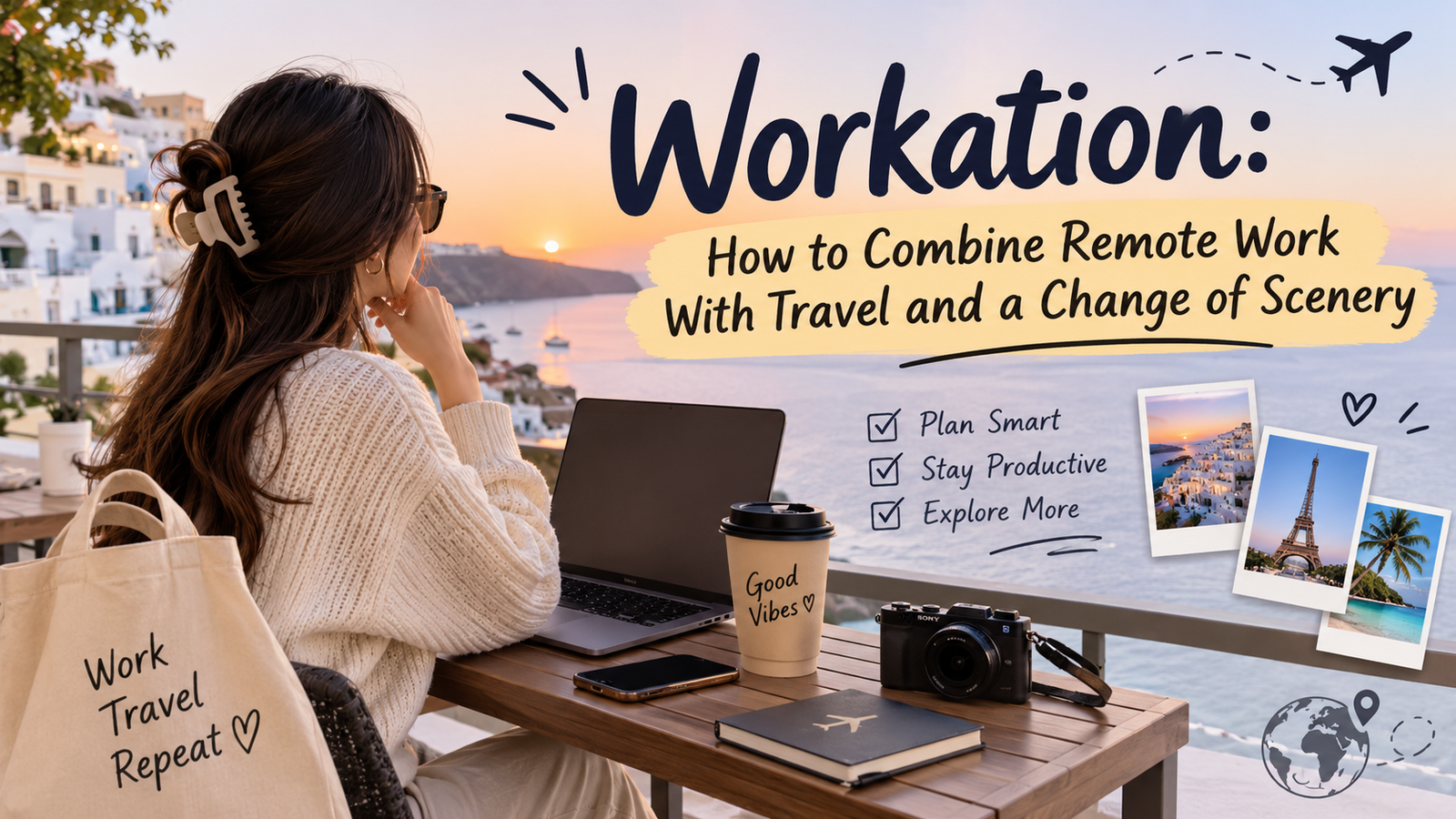
Remote work has changed how people organize their professional and personal lives. Employees and freelancers no longer always need to remain in one location to complete their responsibilities. This flexibility has encouraged interest in workations, which combine regular working hours with temporary stays in different destinations. Rather than taking conventional vacation leave, professionals continue working while exploring unfamiliar surroundings during their free time.
Digital technology makes this arrangement possible by supporting communication, collaboration, and entertainment from almost anywhere. Travelers exploring online leisure may read more about chance-based casino entertainment involving financial risks, although gambling is unrelated to productive travel planning. A successful workation instead depends on scheduling, reliable infrastructure, budgeting, and maintaining clear boundaries between employment and recreation.
What Is a Workation?
A workation combines the words work and vacation. It describes a temporary arrangement in which someone performs professional duties while staying away from their usual workplace.
Unlike a traditional holiday, a workation does not eliminate employment responsibilities. Meetings, deadlines, and assigned tasks remain part of the schedule.
The main difference is location. Professionals might work from a coastal town, mountain village, or another city while spending evenings exploring.
Who Can Benefit From a Workation?
Workations are most suitable for people whose responsibilities can be completed remotely.
Writers, designers, programmers, marketers, consultants, and other digital professionals may have sufficient flexibility.
However, remote employment does not automatically permit working from every location.
Company policies, information security requirements, and legal restrictions can affect eligibility.
Before traveling, employees should confirm whether their employer permits temporary work from the intended destination.
Choosing the Right Destination
Destination selection should begin with working requirements rather than tourist attractions.
Reliable internet, transportation, accommodation, and access to essential services deserve priority.
Time zones also matter when employees collaborate with teams in other countries.
A destination several hours away from colleagues may require meetings outside conventional working hours.
Travelers should evaluate whether these conditions are compatible with their responsibilities before booking accommodation.
Internet Connectivity and Workspace Requirements
Internet reliability is one of the most important factors in planning a workation.
Accommodation descriptions may advertise wireless connectivity without providing information about connection stability.
Before booking, ask about internet speed, available workspaces, and possible interruptions.
A desk, suitable chair, lighting, and access to electrical outlets can improve working conditions.
Professionals handling confidential information should also consider connection security and avoid relying on untrusted networks.
How to Structure a Workation Schedule
A workation becomes difficult when travelers attempt to combine full working days with extensive sightseeing.
A more practical approach involves maintaining defined working periods.
For example, someone might work from 9 a.m. until 5 p.m. and explore the destination afterward.
Weekend excursions can accommodate activities requiring more time.
Planning according to available hours prevents recreational expectations from interfering with professional obligations.
Balancing Productivity and Exploration
Changing environments may provide motivation, but unfamiliar surroundings can also introduce distractions.
Noise, transportation, and the temptation to explore during work hours may affect concentration.
Setting daily priorities helps distinguish essential responsibilities from optional activities.
Travelers can complete demanding assignments during periods when they usually concentrate best.
Less demanding tasks may fit around scheduled meetings.
The objective is to maintain performance while making reasonable use of the destination.
Budgeting for a Workation
Workation expenses extend beyond accommodation and transportation.
Travelers should calculate food, local transport, workspace access, mobile connectivity, insurance, and recreational spending.
Longer accommodation bookings may reduce nightly costs, although discounts depend on the provider.
For example, staying in one location for two weeks may be more economical than moving between several cities.
Comparing total expenses helps determine whether the experience is financially practical.
Accommodation Options for Remote Workers
Apartments, guesthouses, hotels, and shared living spaces can accommodate remote professionals.
Apartments with kitchens may reduce food expenses during longer stays.
Hotels provide services but may offer limited workspace.
Shared accommodation can create opportunities to meet other travelers, although noise may affect concentration.
Before booking, examine cancellation policies, workspace photographs, and reviews mentioning internet reliability.
Location should also be considered alongside accommodation price.
Legal and Tax Considerations
Working remotely from another country may involve immigration, tax, employment, and insurance requirements.
Tourist entry permission does not necessarily authorize remote work.
Rules vary according to destination, nationality, length of stay, and employment arrangements.
Some countries offer residence or visa programs designed for remote workers.
Travelers should verify current requirements through official sources and obtain professional advice when necessary.
Ignoring these obligations can create financial or legal complications.
Common Workation Mistakes
One mistake is planning too many activities around a full working schedule.
Another involves choosing accommodation based exclusively on appearance rather than working conditions.
Frequent relocation can also consume time through packing, transportation, and repeated adjustments.
Travelers sometimes underestimate expenses or forget about time-zone differences.
Avoiding these problems requires realistic planning and a willingness to prioritize professional commitments.
Is a Workation Better Than a Traditional Vacation?
A workation and a vacation serve different purposes.
Traditional vacations provide time away from employment responsibilities, while workations involve continuing regular duties.
Working from another destination can offer variety, but it does not replace genuine time off.
People experiencing exhaustion may benefit more from taking vacation leave.
A workation is most appropriate when the goal is changing surroundings without interrupting employment.
Making Workations Sustainable
Successful workations combine professional reliability with opportunities for exploration.
Choosing suitable destinations, establishing schedules, and maintaining financial control help prevent unnecessary stress.
Travelers should also preserve time for sleep, exercise, and everyday responsibilities.
The purpose is not to transform every working week into an intensive travel itinerary.
Instead, workations provide a way to experience different environments while maintaining professional continuity. With realistic expectations and preparation, remote workers can enjoy a change of scenery without compromising their responsibilities or financial stability.






Add comment