
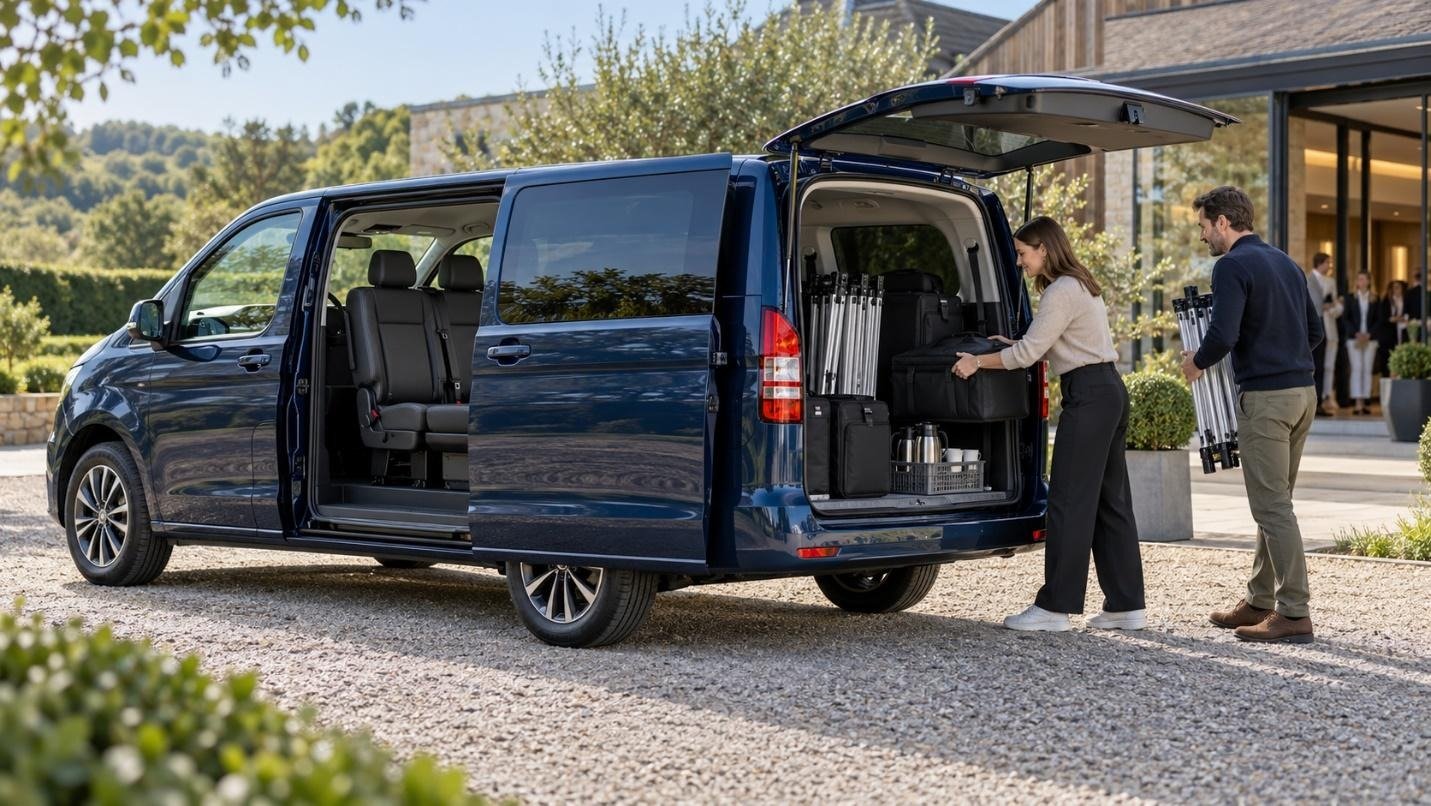
A Kombi is often chosen by businesses that have outgrown a simple choice between “people van” and “work van”. It needs to carry colleagues or clients in comfort, but still leave enough space for the equipment, stock or event materials that make the journey worthwhile.
That flexibility is exactly why the specification matters. A Kombi that looks right in photographs can feel compromised if the seating, wheelbase and load area do not match the way it will actually be used.
Businesses considering Swiss Vans’ new Transporter T7 range should therefore approach the purchase as a configuration exercise. The strongest choice is rarely the highest trim level by default; it is the combination that handles the normal workload without turning every busy day into a packing problem.
Start at the back, not behind the steering wheel
It is natural to begin with the cab. Buyers notice the driving position, screen, dashboard layout and exterior finish first. Yet with a Kombi, the more important decision often starts behind the second row of seats.
Ask what needs to travel in the rear when every passenger place is occupied. This is the point at which many assumptions change. A few soft bags, event stands and a small stock order are very different from tool cases, catering equipment, folded tables or bulky samples.
The rear load area should work without relying on loose stacking or last-minute compromises. Consider the shape of the items as well as their total volume. Long, narrow equipment can create a different challenge from compact but heavy cases. Delicate materials may need protection from the rest of the load, while everyday items should be reachable without moving everything else first.
A sensible specification gives the business room to operate at full capacity, not merely enough room for a quiet weekday journey.
Decide who the seats are really for
Passenger seating is one of the Transporter T7 Kombi’s defining strengths, but it should be specified with a clear purpose.
A business that regularly transports staff between sites has different needs from one that occasionally takes customers to events. In the first case, durable practicality and easy entry may matter most. In the second, passenger comfort, presentation and a refined interior environment could take greater priority.
It is also useful to separate regular passengers from occasional ones. If the same four or five people travel together every week, build around them. If larger groups are only needed a handful of times each year, it may not be worth sacrificing daily cargo flexibility for maximum seating on every journey.
This is especially relevant for businesses such as AV suppliers, mobile training providers, event teams, surveying firms and premium trade services. Their vans often need to present well when they arrive, while still carrying enough equipment to complete the work.
Wheelbase is a business decision, not a badge
A longer vehicle can offer welcome extra room, but it should not be chosen automatically. The additional length needs to be useful often enough to outweigh the impact on parking, manoeuvring and everyday driving.
For a company that spends much of its time in city centres, busy retail parks or residential streets, a more compact Kombi may be easier to live with. Drivers can park closer to customers, access tighter spaces and feel less intimidated by multi-storey or constrained car parks.
A business that carries display equipment, large cases or a regular crew with substantial luggage may gain more from the extra rear space of a longer arrangement. The benefit is not just capacity; it is the ability to organise the space properly rather than pile equipment around passenger belongings.
Before choosing, physically measure the longest and widest items the business carries. Measure the normal items too. A specification should be based on the equipment that creates the recurring difficulty, not the small items that are easy to fit into any vehicle.
Match the drivetrain to the routes, not the brochure
The right powertrain depends heavily on how the Kombi will be driven. A business covering long motorway distances with people and equipment aboard has different priorities from one making short urban visits throughout the day.
Think about annual mileage, typical journey length, regular towing needs, route terrain and the kind of loads carried. These factors have a far greater effect on suitability than simply choosing the most powerful option available.
All-wheel-drive options can be relevant for operators that regularly reach rural locations, unpaved sites or difficult winter routes. For businesses that remain on surfaced roads, a standard drivetrain may be entirely appropriate. Similarly, any hybrid or electric option should be assessed against real charging opportunities and daily journey patterns rather than a general preference for newer technology.
The best approach is to map an average month. Include the longest regular journeys, not only short local trips. Then consider the journeys that happen when the van is fully occupied and loaded, because that is when the specification has to perform without compromise.
Choose trim around the friction points
Trim level can become a distracting part of the buying process. More equipment may sound appealing, but the useful additions are the ones that remove repeated frustration.
For some businesses, that could mean parking assistance and cameras because the van regularly visits tight customer sites. For others, it may be connectivity, secure cabin storage and a more comfortable driving environment because the vehicle covers long distances between venues.
Think about the driver’s most repetitive tasks. Do they spend time reversing into congested spaces? Do they make frequent calls between appointments? Do they use the van as a temporary office? Do passengers regularly travel for more than an hour?
A well-specified Kombi should make those common tasks easier. It does not need every optional feature; it needs the features that support how the business already works.
Test the specification against three common Kombi roles
The mobile events business
An event supplier may transport two or three colleagues alongside stands, banners, small display furniture and personal bags. The priority is a rear space that can be loaded in a planned order, with customer-facing materials protected from scuffs and bad weather.
In this situation, a clean interior, useful access points and enough space to avoid overpacking are often more valuable than maximum payload alone. The vehicle is part of the business’s presentation when it arrives at a venue.
The regional support team
A technical support or training company may carry staff, laptops, demonstration equipment and overnight bags across the country. Passenger comfort becomes more important because the van is used for longer motorway journeys, not just short site hops.
The key is to avoid treating the passenger compartment as an overflow storage area. When people and equipment both have defined space, the team arrives more organised and ready to work.
The multi-purpose local business
Many small firms use one vehicle for several roles: staff transport during the week, materials collection when needed and occasional family or leisure use outside work. Here, versatility is the real value.
The right specification is usually the one that handles the busiest business use first, while remaining pleasant and manageable for everything else. It is better to prioritise the jobs that produce income than to configure the van around occasional use.
Factor in the conversion and protection plan
A Kombi does not always need a full racking installation, but it does benefit from a deliberate storage strategy. Load-area protection, secure tie-down solutions, removable organisers or carefully selected accessories can preserve the vehicle and make it easier to use.
Anything added after purchase should be considered in relation to payload and access. Heavy fittings may improve organisation but reduce the weight available for people and equipment. The final configuration needs to remain legal, safe and workable when the vehicle is fully loaded.
A dealer or specialist supplier should be able to discuss these practical details before the order is placed. That conversation is particularly worthwhile where the van will have a dual business and personal role.
Build the Kombi around the busiest version of the job
The right Transporter T7 Kombi specification is the one that still works when the seats are occupied, the weather is poor and the rear is carrying the equipment that cannot be left behind.
Choose the seating around the people who regularly travel. Select the wheelbase around the loads that genuinely challenge the business. Let the drivetrain reflect the routes, and make trim choices based on the small frustrations the driver deals with every day.
That approach creates a Kombi that feels purposeful from the first week of ownership, rather than one that needs to be worked around.






Add comment