
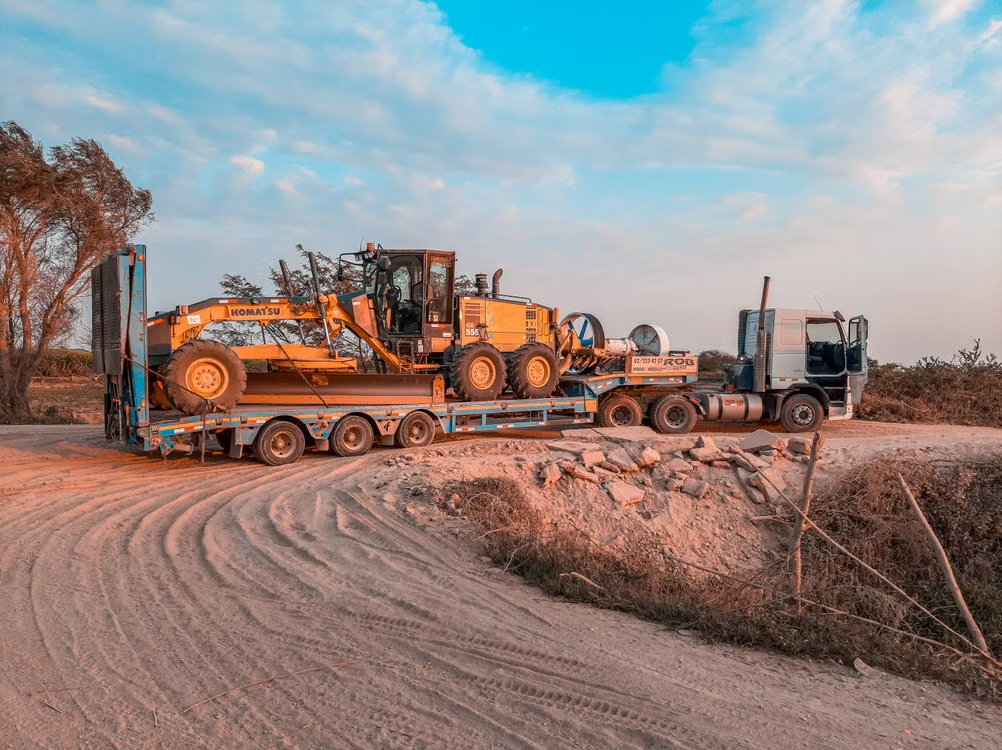
If you have a job to move heavy machinery, building materials, or bulk stuff from one place to another, planning things well and getting proper equipment is a must every time. No matter if the job is about home renovation, clearing land, or carrying small tractors for landscaping work, choosing a correct hauling setup stays very critical. When you transport big loads safely, it protects your cargo and towing truck, and also protects other people driving on the road around you. Many drivers who haul for the first time think any truck having a hitch can carry any heavy load. But if you match things wrongly, it brings severe safety hazards, vehicle damage, and costly delays.
Understanding weight limits, hitch types, and correct load distribution is what forms the real base for a good haul. Before tying any cargo onto the trailer deck, calculating the Gross Vehicle Weight Rating (GVWR) for your towing truck and trailer is the first thing you must do. When looking at options for local work, checking specifications from specialized providers like Sniper Rentals gives helpful context about proper weight ratings, load capacities, and deck dimensions across different equipment trailers. If you have accurate specs, matching the right capacity to your exact job becomes much easier.
Key Weight Ratings Every Hauler Must Know
Before connecting the trailer behind the truck, knowing four important weight terms is a necessary duty for every driver. Exceeding any of these limits can cause brake failure, tire blowouts, or structural frame damage.
- Gross Vehicle Weight Rating (GVWR): The maximum total weight a vehicle or trailer can safely weigh when loaded up fully. This number includes the weight of the trailer body itself, plus all cargo, fluids, and added equipment.
- Payload Capacity: The maximum weight of cargo a person can load onto the trailer deck. To find this amount, you take the empty trailer weight (curb weight) away from its total GVWR.
- Gross Combined Weight Rating (GCWR): The combined weight limit set by the vehicle manufacturer for the towing truck, trailer, passengers, and all inside cargo added together.
- Tongue Weight: The downward force placed by the trailer tongue directly onto the hitch ball of the tow vehicle. Ideally, tongue weight needs to stay around 10% to 15% of the total gross trailer weight.
Selecting the Right Trailer Type for Your Project
Not all trailer designs handle heavy machinery in the same way. Matching the trailer build to your specific load type makes sure you get balanced weight distribution and easier loading work.
Utility Trailers
Utility trailers usually come with lower sidewalls and lightweight frames. Moving smaller equipment, lawnmowers, lumber, or general waste materials fits best with them. Because these trailers have lower payload capacities, pulling them behind light pickup trucks or SUVs stays very simple.
Flatbed Trailers
Flatbed trailers give an open platform having no side walls, which makes them ideal for loading bulky, wide, or strange-shaped cargo using a forklift or crane. They give you multiple anchor points placed all along the outer rails so attaching straps is easy.
Equipment and Tilt-Bed Trailers
Built specifically for transporting heavy machinery like skid steers, mini-excavators, and backhoes, equipment trailers feature reinforced structural frames, heavy-duty axles, and strong ramp setups. Tilt-bed models pivot all the way down to the ground, taking away the need for steep loading ramps and allowing low-clearance equipment to drive right up smoothly.
How to Load and Secure Cargo Safely
Following proper loading habits prevents dangerous trailer sway, which stands as one of the main causes for highway towing accidents. Using a systematic method step by step keeps your load stable through the whole trip.
1. Position on Flat Ground
Always park the towing truck and trailer on a completely level surface before starting to load. Set the parking brake on the tow vehicle firmly and put chocks behind the trailer wheels so nothing moves unexpectedly while driving machinery onto the deck.
2. Follow the 60/40 Weight Distribution Rule
Place 60% of the total load weight on the front half of the trailer deck (the side closest to the truck), while keeping the remaining 40% positioned behind the axle. Putting too much weight towards the back creates negative tongue weight, which lifts the rear of the towing vehicle and causes dangerous trailer sway at higher driving speeds.
3. Use 4-Point Tie-Down Systems
When handling heavy equipment, locking the load down at four separate points using heavy-duty Grade 70 transport chains and ratchet binders is necessary:
- Attach straps or chains to solid structural parts on the machine frame, never to hydraulic hoses or steering linkages.
- Cross the chains in an “X” shape at both the front and back ends to prevent side-to-side shifting during turns.
- Confirm that all straps or chains have a Working Load Limit (WLL) staying higher than the total weight of the item being secured.
Essential Driving Practices While Towing
Towing heavy loads completely changes how your truck accelerates, takes turns, and comes to a stop. Changing your driving habits reduces strain on vehicle parts and keeps road driving safe.
- Increase Stopping Distance: Carrying a loaded trailer increases your total stopping distance significantly. You ought to leave double the usual space between your truck and the car ahead, giving yourself plenty of room for gradual braking.
- Adjust Brake Controllers: When your trailer uses electric brakes, set the brake controller inside your cab so trailer brakes pull smoothly together with truck brakes, without locking up tires or pulling the vehicle hard.
- Make Wider Turns: Trailer wheels always follow a tighter curve than the front wheels of your towing truck. Swing out wider at street corners to avoid hitting sidewalk curbs, road signs, or parked vehicles.
- Control Trailer Sway: If the trailer starts swaying side to side, keep a firm grip on the steering wheel and hold it straight. Lightly squeeze the trailer’s electric brake controller by hand inside the cab without pressing down hard on your truck’s foot brake pedal.
Pre-Departure Safety Checklist
Go through this quick inspection check every single time before hitting the open road:
- Hitch Latch Secured: Confirm the coupler sits fully over the hitch ball and the safety lock pin is pushed in place.
- Safety Chains Crossed: Cross the safety chains under the trailer tongue in an “X” shape so they catch the tongue if the coupler unlatches.
- Breakaway Cable Attached: Fasten the emergency breakaway cable straight to the towing vehicle frame.
- Electrical Plug Connected: Test that tail lights, brake lights, and turn signals are all flashing and working correctly.
- Tire Pressure Checked: Measure tire pressure on both the towing vehicle and trailer to match manufacturer guidelines printed on the tire sidewall.
- Cargo Straps Tightened: Check that all tie-down chains, ratchet straps, and binders stay tight with no loose ends hanging down.
Taking extra time to check weight ratings, select the right equipment, and tie down your load correctly ensures a smooth, trouble-free transport job from start to finish.







Add comment