
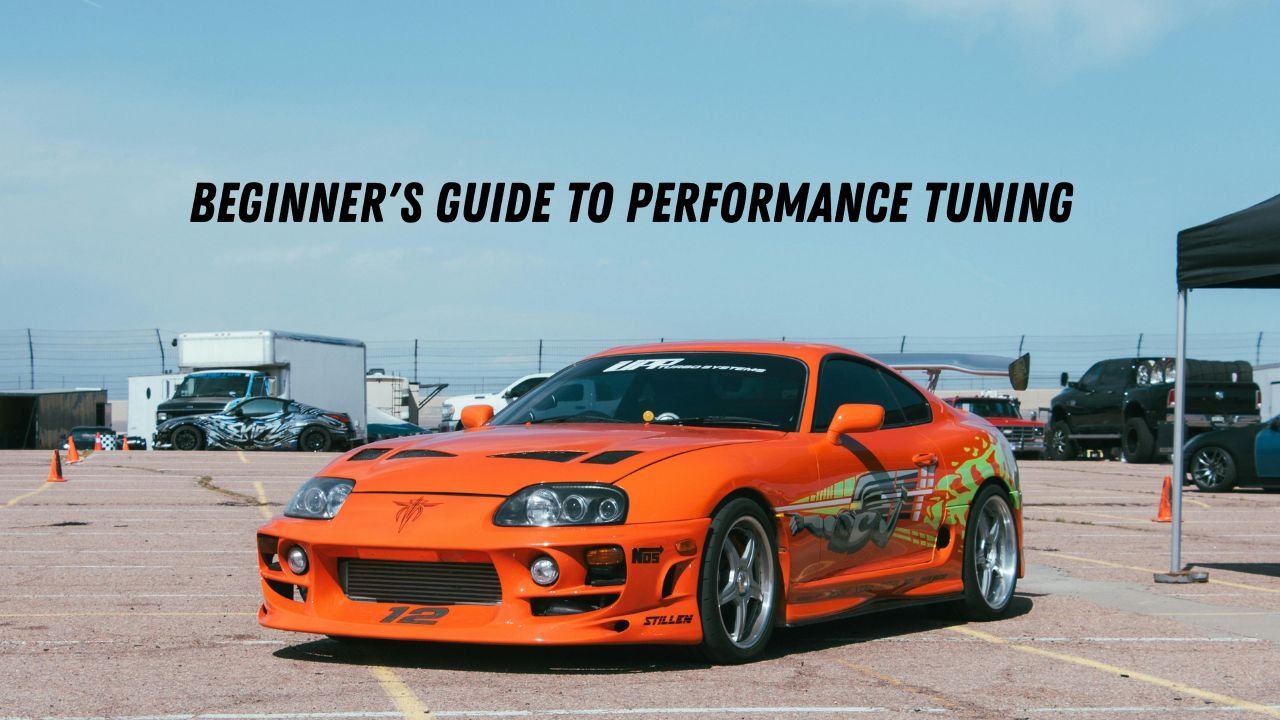
Performance tuning is the process of improving a vehicle’s power, responsiveness, and overall driving performance.
Every car leaves the factory as a compromise, with engineers balancing fuel economy, emissions regulations, reliability, and drivability across different markets and road conditions. As a result, most vehicles contain untapped performance potential when they use parts from Turbo Tech Performance hidden within their engine management systems.
By adjusting how the engine, fuel system, and drivetrain operate, drivers can improve horsepower, throttle response, handling, and efficiency.
This beginner’s guide to performance tuning explains the fundamentals of engine tuning, common modification paths, and how to upgrade your vehicle safely and effectively.
What Is Performance Tuning?
Performance tuning involves modifying a vehicle’s mechanical or electronic systems to improve performance beyond factory settings.
This can include ECU remapping, adjusting ignition timing, optimizing the air-fuel ratio, and upgrading intake or exhaust components to increase power, throttle response, and overall efficiency.
The goal is not always maximum horsepower. Many drivers tune for sharper throttle response improvement, better low-end torque, or improved fuel efficiency at cruising speeds.
Three Stages of Auto Performance Tuning
The performance tuning world organizes upgrades into three broad stages, each building on the last:
Stage 1: Bolt-On Basics
Stage 1 tuning includes basic performance upgrades without internal engine changes, such as a performance air intake, high-flow exhaust, ECU remapping, and sometimes an upgraded intercooler for turbo engines.
These mods improve airflow and engine efficiency, leading to better throttle response and around 10–30% horsepower gain, especially in turbocharged vehicles, making it the most common entry-level tuning stage.
Stage 2: Forced Induction Upgrades
Stage 2 upgrades include an upgraded turbo or supercharger, high-flow injectors and fuel pump, a reinforced clutch or torque converter, and stronger engine mounts.
Dyno tuning is mandatory at this stage to properly balance fuel, boost, and ignition timing and prevent engine damage.
Stage 3: Internal Engine Work
Stage 3 involves opening up the engine and replacing internal components to handle extreme power levels. Forged pistons, connecting rods, crankshafts, and head work all fall here.
This is the territory of dedicated track vehicles and professional builds. For most street drivers, stages 1 and 2 provide all the performance they need without compromising daily driveability.
ECU Remapping: The Core of Modern Performance Tuning
The Engine Control Unit (ECU) serves as the main system that manages and controls a modern engine. It controls ignition timing adjustment, fuel injection tuning, boost pressure, rev limits, and dozens of other parameters based on tables of values called maps.
ECU remapping basics involve overwriting the factory maps with new values calibrated to your specific vehicle, fuel quality, and modifications.
A good remap optimizes the air-fuel ratio tuning across the entire RPM range, advances ignition timing where safe, and raises boost on turbocharged engines to the maximum safe level.
The result is a car that feels sharper, responds faster, and pulls harder throughout the rev range, all from the same hardware. This is why ECU remapping is considered the highest-value performance modification available.
Dyno Tuning: The Right Way to Calibrate a Tune
A dynamometer, or dyno measures the power output of your engine under controlled conditions. The dyno tuning process involves running the vehicle through the RPM range repeatedly while the tuner makes live adjustments to the ECU maps.
This is how professional tuners find the exact ignition timing and air-fuel ratio that produces maximum safe power without detonation.
Trying to tune purely by feel on a public road is imprecise and potentially dangerous. A dyno session typically costs between $300 and $800, but the accuracy it provides protects your engine and maximizes every dollar spent on hardware upgrades.
Fuel Injection Tuning and Air-Fuel Ratio
Fuel injection tuning is the process of adjusting how much fuel the injectors deliver at each load point. Getting the air-fuel ratio tuning right is the foundation of any good performance tune.
At wide-open throttle, performance tunes typically run a richer air-fuel ratio of about 12.5:1 to 13:1 to lower combustion temperatures and reduce the risk of knock. At light throttle or cruising, the mixture is kept near stoichiometric or slightly lean to improve fuel efficiency.
This controlled switch between rich under load for power and lean at cruise for economy is what makes a professional tune more refined than a generic off-the-shelf remap.
What Is the 30-60-90 Rule for Cars?
The 30-60-90 rule is a maintenance schedule based on mileage intervals at 30,000, 60,000, and 90,000 miles. At each stage, key service items like filters, fluids, spark plugs, belts, and other wear components are inspected or replaced.
This maintenance becomes even more important for tuned vehicles, as higher performance levels can increase stress and wear on engine parts.
If you’re planning to tune your car, it’s best to complete the 30-60-90 service first so the engine starts from a strong, healthy baseline before any extra power is added.
Throttle Response Improvement
However, these modifications will not add dramatic horsepower on a stock engine, but they do make the car feel more responsive and connected, which is what most everyday drivers are actually after.
Not every driver wants to remap the ECU. There are smaller, more accessible ways to improve throttle response:
- A performance air intake reduces intake restriction and improves airflow at all throttle positions.
- A performance exhaust reduces back pressure, helping the engine expel gases more efficiently.
- Throttle body spacers enhance airflow turbulence and improve air–fuel mixing in certain engines.
- High-performance spark plugs promote more complete combustion and can help reduce engine hesitation.
Important Considerations Before Tuning
Warranty Implications
Modifying engine software or hardware can void manufacturer warranties. Some countries have laws protecting certain consumer rights, but tune detection is increasingly sophisticated. Understand the risks before proceeding.
Emissions Compliance
Many performance tuning techniques affect emissions output. Ensure your modifications remain legal in your jurisdiction. Removing catalytic converters or disabling emissions systems carries penalties and harms air quality.
Supporting Modifications
Big power requires strong foundations. Upgrade brakes, suspension, and tires to match the horsepower increase methods. Power without control is dangerous.
How to Improve System Performance: Where to Start
Establish a Healthy Baseline First
Start with a full service and fix any existing mechanical or electronic issues before making performance upgrades.
Define Your Performance Goal
Decide whether you want increased peak power, improved daily drivability, or better fuel efficiency.
Begin with Stage 1 Modifications
Start simple with intake, exhaust, and an ECU remap for balanced gains.
Choose a Reputable Performance Tuner
Work with an experienced tuner who uses a dyno and understands your specific vehicle platform.
Respect Hardware Limitations
Avoid pushing beyond the limits of your fuel system, clutch, cooling system, or other supporting components.
Monitor Vehicle Behavior After Tuning
Closely observe performance and look for any unusual sounds, vibrations, or warning signs.
Final Thoughts
Performance tuning opens exciting possibilities for vehicle performance optimization. By mastering ECU remapping basics, understanding fuel injection tuning, and respecting mechanical limits, beginners can achieve impressive results safely.
Start small, verify changes with proper testing, and always prioritize reliability over peak numbers. The best tune is one that delivers strong performance every day without breaking down.
Faqs
What is performance tuning?
Performance tuning is the process of modifying a vehicle’s engine or ECU settings, such as fuel and ignition maps to increase power, improve throttle response, or boost efficiency beyond factory specifications.
What are the three stages of tuning?
Stage 1 uses basic bolt-ons, while Stage 2 adds upgraded hardware like turbo and fuel system parts and Stage 3 involves internal forged engine upgrades for maximum performance.
What are the fundamentals of EFI tuning?
EFI tuning adjusts air-fuel ratio, ignition timing, and fuel delivery across RPM and load ranges to improve efficiency, performance, and engine safety.
What does improved throttle response mean?
It means the engine reacts faster and more directly to accelerator input, reducing delay between pressing the pedal and acceleration.
Does tuning void my car’s warranty?
Not always. A warranty claim can usually only be denied if the modification is proven to have caused the failure, but policies vary by manufacturer and region.







Add comment